Infants (ages 1 month to 12 months): Propping the milk bottle, giving the milk bottle in the bed, and giving fruit juices in a bottle may increase the incidence of poor dental health. Cleaning should begin once the first tooth has erupted. Using a toothbrush may be too harsh for the infant's gums, so initial cleaning should be done by wiping with a damp cloth. A small, soft-bristled toothbrush is recommended as more teeth erupt. The American Academy of Pediatric Dentistry insists that fluoride toothpaste should be used at the beginning of 6 months unless the home drinking water has adequate fluoride content. Water is preferred to toothpaste for infants younger than 6 months as it may be swallowed. An oral health examination by a qualified pediatric health practitioner should be done by 6 months of age.
Dental Health Facts
By Developmental Age Group
By Developmental Age Group
More articles are located at the bottom of the page
References:
American Academy of Pediatrics, Pediatrics Collaborative Care Program: Oral health risk assessment training for pediatricians and other child health professionals, Rockville, Md, 2000, National Institutes of Health.
American Academy of Pediatric Dentistry: Guideline on infant oral health care. In AAPD reference manual 2005-2006, 2006 retrieved Jan 11, 2008, from http://www.aapd.org/media/Policies_Guidelines/G_InfantOralHealthCare.pdf.
Krause-Parello CA: Tooth avulsion in the school setting, J School Nurs 21(5):279-282, 2005.
Martof A: Consultation with the specialist: dental care, Pediatr Rev 22(1):13-15, 2001.
Wong, D. L., Hockenberry, M. J., & Wilson, D. (2009). Wong's Essentials of Pediatric Nursing (8th ed.). St. Louis, Missouri: Mosby/Elsevier.
American Academy of Pediatrics, Pediatrics Collaborative Care Program: Oral health risk assessment training for pediatricians and other child health professionals, Rockville, Md, 2000, National Institutes of Health.
American Academy of Pediatric Dentistry: Guideline on infant oral health care. In AAPD reference manual 2005-2006, 2006 retrieved Jan 11, 2008, from http://www.aapd.org/media/Policies_Guidelines/G_InfantOralHealthCare.pdf.
Krause-Parello CA: Tooth avulsion in the school setting, J School Nurs 21(5):279-282, 2005.
Martof A: Consultation with the specialist: dental care, Pediatr Rev 22(1):13-15, 2001.
Wong, D. L., Hockenberry, M. J., & Wilson, D. (2009). Wong's Essentials of Pediatric Nursing (8th ed.). St. Louis, Missouri: Mosby/Elsevier.
Adolescents (ages 12 years to 18 years): Although the rate of caries formation is not as great as in childhood, dental health should not be neglected in the adolescent stage. Substantial proportions of children in the United States still do not receive the preventative care they need. Pit and fissure sealants (“fillings”) are a safe and effective technique for the prevention of dental caries at this stage. Corrective orthodontic appliances such as braces are usually worn during this period and are frequently a source of embarrassment and concern. Reassurance of the temporary nature and the beneficial outcome of wearing corrective orthodontic appliances may help the adolescent tolerate the inconvenience. Reinforcement of the orthodontist’s directions regarding use and care of the appliances is particularly important. Close attention to brushing and flossing at this time is also imperative.

School-Aged (ages 6 years to 12 years): The first permanent teeth erupt at the beginning of this stage, and appear in about the same order as the eruption of the primary teeth. Permanent teeth usually appear sooner in girls than in boys. Dental hygiene and regular attention to dental caries are important parts of health supervision during this period. Correct brushing and flossing techniques should be taught, reinforced, and monitored until the child can effectively perform their own dental care without supervision. Children who become accustomed to the feel of a clean mouth at an early age usually maintain good dental hygiene throughout life. For a child in this stage with a mix of primary and secondary teeth, the best toothbrush is one with an overall length of about 6 inches and with soft nylon bristles. The prevalence rate of caries increase from 18% of children ages 2 to 4 years to 52% of children ages 6 to 8 years. A permanent tooth that becomes avulsed (“knocked out”) should be inserted back into the socket or placed in cold milk, and the child should be immediately transported to a dentist. A tooth that is replanted within 15 minutes has a 98% survival rate.
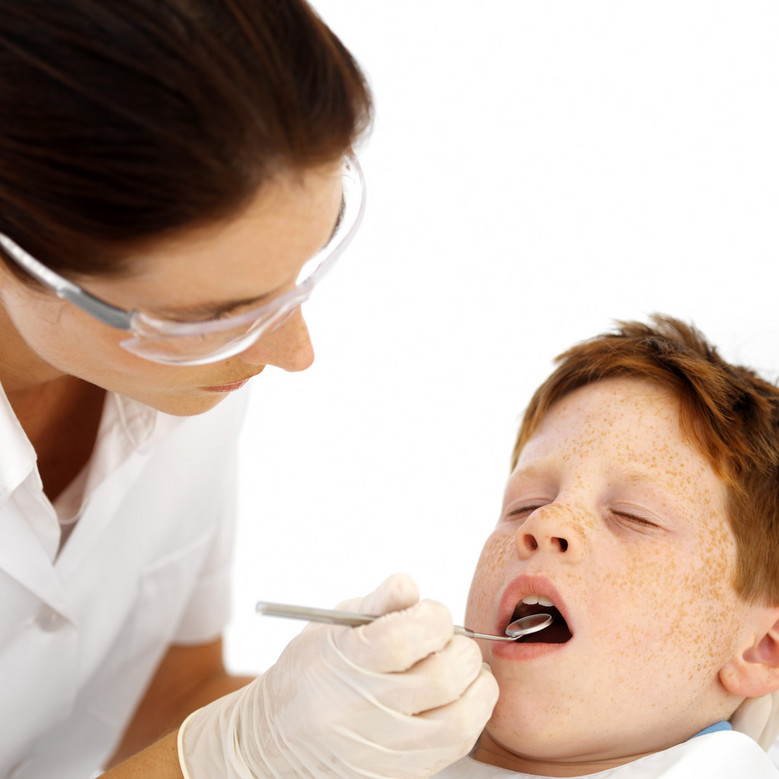
Preschoolers (ages 3 years to 5 years): The eruption of the child’s primary (baby) teeth is complete by 3 years of age. At this age they still may need assistance and supervision while brushing, and flossing should be done by the parents. Professional care and fluoride supplements (if needed) should be continued. A routine dental check-up should be done every 6 to 12 months depending on family history, and the presence or absence of dental caries. Parents are encouraged to monitor the dental care provided by others for children who are cared for away from home. Trauma to teeth is a common occurrence during this period, and a prompt evaluation by a dentist is needed if oral trauma occurs. Previously occupied spaces must be well preserved for the eruption of the secondary (permanent) teeth.

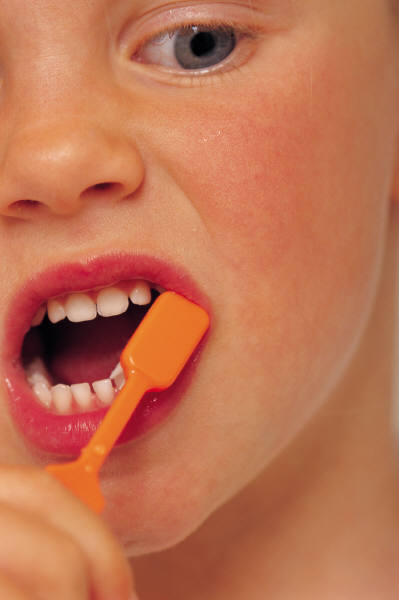

Toddlers (ages 12 months to 3 years): Every child should have an established dentist by 12 months of age. Poor oral hygiene and poor eating habits are associated with the development of caries in children. The most effective way to remove plaque is by brushing and flossing daily, and should be done by the parents for effective cleaning. Brushing should be done with a small toothbrush with soft, rounded, multitufted nylon bristles that are short and uniform in length. Toothbrushes should be replaced when bristles become frayed or bent. Since brushing doesn’t complete clean the teeth, flossing should be done after brushing to remove plaque and food from between the teeth and below the gum line. The teeth should be rebrushed to remove any remaining plaque. With the exception of water, nothing to eat or drink should be given after nighttime brushing.
Dental caries (cavities) is the single most chronic disease of childhood. Prevention of tooth and gum diseases begins within the first year of life.
Additional Articles